Category: Art journalism

  • Giverny: France

    Giverny: France

    Monet’s house and gardens, and the fascinating life of the artist. La maison et les jardins de Monet, et la vie fascinante de l’artiste.

    “The richness I achieve comes from nature, the source of my inspiration.”

    Claude Monet

    Monet’s ‘The Water-Lily Pond’ is an outstanding example of his impressionistic prowess. Within the brushstrokes, you can feel the weight and movements of Monet’s hand; surrounding the still stability of the Japanese bridge with a vibrant energy.

    Find yourself standing on the japanese bridge above the rippling water- surrounded by an orchestra of wildflowers and birdsong, as if you’d just stepped into the painting. Monet’s style, some brushstrokes passionately rendered in quick motion, others pressed thoughtfully to the canvas, were borne of the inspiration he sought in these gardens.

    Claude Monet The Water-Lily Pond, 1899, Oil on canvas, 88.3 x 93.1 cm Bought, 1927 The National Gallery, London
    Travelling to Giverny

    The day began with an early train ride to Vernon-Giverny, from Paris Saint-Lazare. When I first stepped into Saint-Lazare station, I had a feeling I’d been here before. It wasn’t until the Impressionist exhibition (I’ll be writing about on here soon), that I realised why I recognised it:

    Claude Monet, Saint-Lazare Station, 1877, Oil on canvas, 54.3 x 73.6 cm
    The National Gallery, London

    I’d visited the station many times, in the form of Monet’s paintings. Those impressionist brushstrokes somehow manage to catch a cloud, to capture the intangible; the steam rising from the powerful engines below. Of course, the train you’ll take from Paris to Vernon-Giverny is less steam-dream, but still exciting. (And more environmentally friendly).

    On arrival, you can rent bikes from just outside the station ‘Gare de Vernon’ in Giverny like we did. I rode on, picking up speed on some roads and gliding slowly along others.

    I stopped to admire curious street names, the exposed wooden beams on houses, the elegant town hall, and we sang “L.O.V.E.” as we cycled along a bike path through meadows. Writing that last part does instil a little cringe, but the fellow cyclists seemed to enjoy our little rendition! 😉

    At the Foundation of Claude Monet

    Opened to the public as a foundation, Claude Monet’s house and gardens are maintained and exhibited in all their glory.

    The house and gardens are open from the 1st of April to the 1st of November, 2023, but always check availability on the website. Here is a link to purchase tickets:

    https://claude-monet-giverny.tickeasy.com/fr-FR/accueil

    Monet was born on 14 November 1840 in Paris, and baptised as Oscar-Claude Monet, but his parents simply called him Oscar. He showed artistic promise from an early age. Monet’s mother encouraged his artistic pursuits, though his father would rather have seen Monet pursue a career in business. His mother, Louise, was a singer and shared a close bond with her son. Following her death in January 1857, when Monet was only sixteen, Monet was sent to live with his wealthy aunt Marie-Jeanne Lecadre, who became his most significant financial support during his early art career.

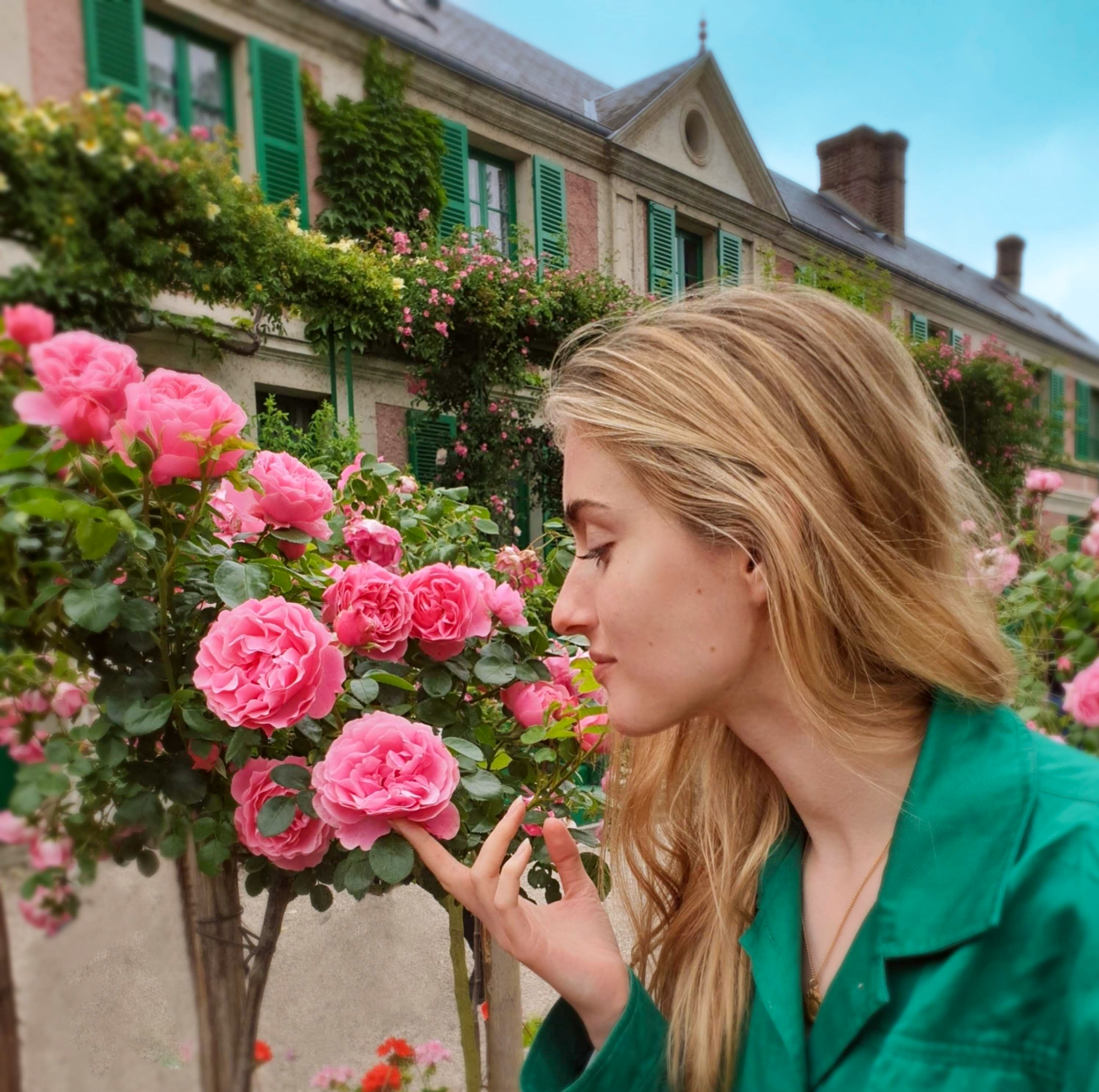
    View on side of Monet’s house from the garden

    During the next few years, from 1858 to 1860, Monet stayed in Paris to continue his studies, and enrolled in Académie Suisse. There he met Camille Pissarro, who would become a great friend and fellow pioneer of the Impressionist movement. Monet was soon after called for military service, and served with the Chasseurs d’Afrique (African Hunters), in Algeria, from 1861 to 1862. I included this significant moment in his life as Monet later says the vivid colour and light of North Africa “contained the germ of my future researches”, proving the powerful effect this experience had on Monet.

    Exploring the gardens

    The garden paths

    The Japanese bridges

    Above the rippling water- surrounded by an orchestra of wildflowers and birdsong

    Les Nymphéas or ‘The Waterlilies’

    Soft brushstrokes; some passionately rendered in quick motion, others pressed thoughtfully to the canvas, were often borne of the inspiration he sought in these gardens.

    Exploring inside

    In 1883, Monet rented the house and gardens we know and love today, which provided a domestic stability for him and his family. There were local schools close enough for the children to attend, the country landscape inspired Monet’s depictions of natural scenery, and he used the barn as a painting studio.

    The dining room

    Over the next several years the family worked, developing the gardens, which grew and flourished along with Monet’s growing success. In 1890, Monet purchased the house. Monet built a greenhouse and a second studio (shown below)

    Exploring the home and gardens of this French impressionist artist was really a dream come true, and as you can probably tell from the photos, I was excited.

    The kitchen

    Check out more before your visit, via the Virtual Tour

    Below is Blanche Hoschedé Monet’s bedroom, step-daughter of the artist (from Monet’s second marriage) and manager of the house and gardens for twenty years, following Monet’s death in 1926. Blanche marries Monet’s eldest son Jean in 1897.

    The master bedroom- At the end of the artist’s life

    The photos above show the light magnolia and pine comfort of Monet’s bedroom. It was here that Monet passed away in the winter of 1926. An honourable mention must be made to a close friend of Monet’s; Georges Clemenceau, a French statesman and journalist, who ordered a car and rushed to Monet’s side when he heard Monet was about to succumb to the battle of lung cancer. Clemenceau was Prime Minister of France from 1906-1909 and again from 1917-1920, and it was during these later years in office that he became a major contributor to the Allied victory in World War I and a framer of the post-war Treaty of Versailles.

    Caricatures of Monet and Clemenceau

    The friendship between the two was sparked when the Clemenceau first saw Monet’s series of Rouen’s Cathedrals. The series, depicting the Cathedral at different times of the day and the changes of light it brings, is composed of 40 masterpieces, exemplified below. Clemenceau published an article on Monet in the newspaper La Justice, and became enamoured by the artist and the idea of the man behind the artworks. Clemenceau was finally introduced by the art critic Gustave Geoffroy in Monet’s house, in Giverny. Being the place where the friendship began, it seems important and fitting that it would be the setting of their farewell.

    Monet and Clemenceau were both driven and capable men in their own fields, and the two found common ground in matters such as education and politics. Clemenceau was also an art lover, and they shared seeds and bulbs for their gardens, so the friendship between these two developed easily.

    Claude Monet, Study of Rocks; Creuse: ‘Le Bloc’ 1889, oil on canvas, 72.4 x 91.4 cm

    Claude Monet gifted the famous painting ‘Study of rocks, the Creuse: ‘Le Bloc’ to Clemenceau, who nicknamed it ‘le bloc’. The title is Monet’s nod to Clemenceau’s speech of 1891 wherein he says “the French Revolution is a block.” ‘Le Bloc’ (The Rock) was to be the title of a political journal Clemenceau was to establish.

     This artwork is now held in the Royal collection, bought by the Queen Mother in 1949.

    I’d like to leave you with a few poignant quotes from Monet:

    “I must have flowers, always, and always.”

    Claude Monet

    “Everyday I discover more and more beautiful things. It’s enough to drive one mad. I have such a desire to do everything, my head is bursting with it.”

    Claude Monet.

    I especially resonate with this quote from Monet, as it is how I think about creating my own paintings- and the joy of creating. A mind full of enthusiasm and fervour, finding inspiration everywhere, as there is so much beauty on this earth, how can one possibly paint it all?

    Claude Monet The Water-Lily Pond 1899 Oil on canvas, 88.3 x 93.1 cm Bought, 1927 NG4240 https://www.nationalgallery.org.uk/paintings/NG4240


    Exactly 122 years ago, Monet painted “The Water-Lily Pond” (1899). His vision is still there today, the natural haven he designed is thriving, and the original painting is currently on display in the National Gallery, London. With hundreds of other works across the world.
    What a legacy.

    “It’s on the strength of observation and reflection that one finds a way. So we must dig and delve unceasingly.”

    Claude Monet

    https://fondation-monet.com/

  • Paris: Musée du Louvre

    Paris: Musée du Louvre

    A post of its own; the Louvre, the highlights, and a race to the Mona Lisa before closing!

    I fell in love with the Louvre before even entering, the architecture is just incredible, and we had a lot of fun inside!

    It is said that nothing ever lasts. And yet, standing tall in all its glory, is this beauty. Once a Palace for French kings, the Louvre was transformed into a public museum following the French Revolution of 1789. It later became the playground of emperor Napoleon I, who briefly named it after himself, AND it was seized by the Nazis to store stolen art in World War Two.

    view from the upper levels of the Louvre, across the courtyard to the left wing of the museum

    After staring meticulously at all the canvases on the first few levels of the Louvre, three hours have passed so quickly. Looking out of the windows, the sun had moved right across the courtyard, lighting the opposite wing of the palace, which glistened after the rain.

    The Highlights

    Below I’ve included the artworks which I spent the most time with, absorbing all those carefully placed or quickly rendered details. A brilliant painting is like a clear night sky; the longer you stare, the more stars appear.


    François Gérard (1770–1837), Cupid and Psyche, 1798, Oil on Canvas. In Greek and Roman mythology, and many other depictions of the story, the couple must overcome countless obstacles, until they are finally joined in a sacred marriage, through which their love transcends mortal suffering. The little butterfly above Psyche’s head alludes to the presence of the soul. In Greek mythology, and in the modern language today, Psyche is Greek for Soul. As in antiquity, the image of a butterfly represents the soul’s ability to leave the body and to transition to eternal life after death. Souls bond in sacred marriage, and here the souls deliver Cupid and Psyche to a state of eternal love.
    William-Adolphe Bouguereau (1825 – 1905) painted The First Kiss which depicts Cupid and Psyche as children. A print of this painting hangs at the head of a hallway in my family home, perhaps why I was so drawn to Gérard’s piece above. For more of Bouguereau’s work, you must visit the Musée d’Orsay. He paints radiant skin like no other.

    At the highest level of the palace, the guard sounded the last call for closing. I felt rather satisfied with the amount of colour and narratives we’d absorbed that day, but I still felt that something was missing. Had I lost my boyfriend somewhere?

    No, he was by my side. Dropped my bag? Nope, that was on my shoulder, I thought, tapping it. Then it dawned on me, as the guard ushered us towards the exit, I’d forgotten the most iconic smile.

    We ran through grand halls, centuries worth of artworks, and I resisted the urge to stop and stare so many times, to finally reach the lower level and La Gioconda, (the Italian name for the Mona Lisa. La Gioconda translates to ‘jocund’ (happy) literally, ‘the jocund one’, and her portrait is rendered on a 77cm × 53cm wooden panel, from the poplar tree. The poplar seems to feature often in the works we know and love; Monet himself was inspired to create many versions of the tall and delicate poplar trees which lined various stretches of the Seine river

    The lady who posed as Mona Lisa is likely to be to be Lisa del Giocondo, (1479–1542) hence the title La Gioconda, an Italian noblewoman and member of the Gherardini family of Florence and Tuscany.

    Smile, and she smiles back
    Did you know?

    🌟 The Mona Lisa belongs to France : After Italy’s Leonardo da Vinci’s death in Amboise, France, the artist’s assistant Salaì inherited the work and sold it to France’s King Francis I for 4,000 gold coins. (May 2, 1519)
    🌟According to research, engineer Pascal Cotte discovered that the Mona Lisa did have eyebrows and eyelashes: but they were probably the one of the last things Da Vinci added to the her face, and since all the cleanings the painting has undergone, and general aging, they have faded so that they are barely visible to the human eye.
    🌟 It would take you around 100 full days to see all of the Louvre, and that is if you only spent 30 seconds on each piece.


    It is hard to put into words just how vast, and ancient the experience is; Exploring these hallways and galleries allows us to glimpse at past civilisations. It brings to the forefront the morals, the beauty and the values of our societies, some which have changed for the better, others which people fight to preserve.
    Thank you to all those who help to preserve it; restorers, curators, janitors, security, and sales staff.

  • New beginnings and the determination to create: Liverpool, UK

    New beginnings and the determination to create: Liverpool, UK

    To officially launch the website, I present to you a magnificent collection, and encourage you to create…

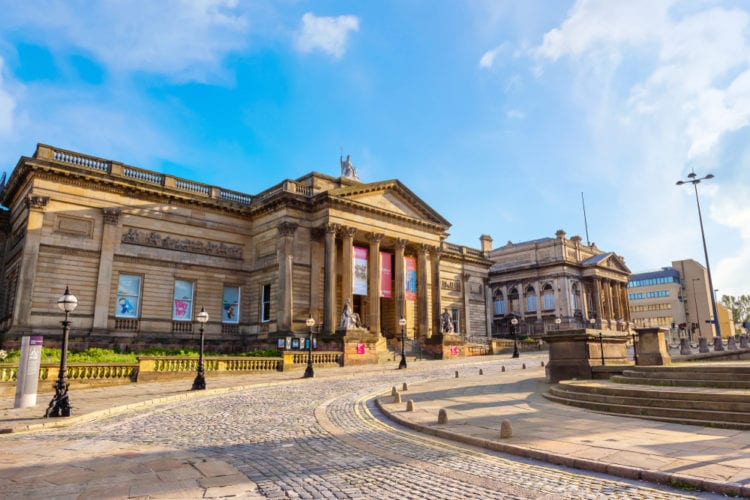
    The Walker Art Gallery holds one of the finest collections in the UK, spanning paintings, sculpture and decorative art from the 1300s to the present day.

    The collection includes artworks from the European Renaissance, and masterpieces by Rubens, Rembrandt, Turner and Stubbs. During your visit you’ll explore Impressionist paintings from Monet and Degas, and my personal favourite the Pre-Raphaelite artworks by Rossetti and Millais. There are also new exhibitions regularly, and contemporary works by Hockney, Wylie and the winners of the John Moores Painting Prize.

    This gallery wasn’t far from my home during my high school years. From my leafy suburb, I’d take frequent trips across the Mersey river and into Liverpool. As the bus emerged from the tunnel, I was met by the neo-classical columns of the Walker Art Gallery just opposite, with a stoic presence like grand gatekeepers to the city.

    I’m stood in front of Blotter, Peter Doig’s 1993 oil on canvas and winner of the John Moores exhibition of the same year, photographed here in 2017.

    As you stand in front of an artwork, your eyes dart across the vibrant intricacy of a landscape. A few steps forward, and you’re held in a pensive silence, captured by the passionate expression of a face staring back at you from its golden frame. In these moments, the artworks on the walls of this gallery- and the human stories they immortalise- are the answer to why we create, and why we travel so far to see the creation of others.

    Dante Gabriel Rossetti, Dante’s Dream, 1869-71, Oil on Canvas, 216 cm x 312.4 cm.

    As an introduction I’ve picked out one of my favourite pieces in the entire collection, Dante’s Dream. Rossetti held a lifelong fascination of his namesake: the Italian poet Dante Alighieri.

    Dante is considered to be the ‘father of the Italian language’, as he was born and raised in Florence, and wrote his works in a dialect of the Italian language (Florentine vernacular), as opposed to writing in Latin, which was the standardized norm for well-educated citizens, both in literature and Mass. He pioneered an accessibility of the Arts to a wider audience, not only the elite. I believe there is a poetic significance in displaying an artwork inspired by such a man, within a gallery open to the public. One of the beauties of the UK is free entry to the majority of museums and galleries- it emphasizes how culture is valued by our government, the value of the Arts to the general population, and of course to international visitors.


    Sometimes, creativity suffers when you are faced with adversity. I don’t say this just to artists, but to everyone: With our very human flaw of attempting to please everyone, we forget what it is we are true to.

    In those moments of doubt, I think back to that simple reason why anyone creates.

    With a rising tide deep in my chest- a feeling of determination- I realise that we all contribute something in our time on this earth, and this is what I want to contribute, for you.

    Laura Rozamunda

    If ever you doubt your purpose and your value, remind yourself that you are here to contribute- and most importantly to enjoy!

    These early experiences formed a passion for the arts, the passion that inspires me to write this for you.

    I hope this is the start to a very real writer-reader connection, and I look forward to every new adventure with you all.